
When financial data isn’t easily accessible, everything else slows down
Financial data never sits still. Regulatory changes, mergers, and shifting schemas create access bottlenecks and validation gaps your infrastructure wasn’t built to handle. EASL empowers banks and funds to overcome this strain, providing the adaptability to fetch, validate, transform, and deliver data across core systems instantly, without tearing down what already works.
*Turn your legacy systems of record into systems of work with EASL.
The data friction slowing down FinServ companies
Dozens of homegrown and legacy systems interacting through fragile, high-risk integrations
Integrations held together by manual fixes that fail when upstream systems change
Legacy and modern environments that must run side-by-side through migrations or mergers
Spiraling reconciliation cycles that inflate cost and increase compliance exposure
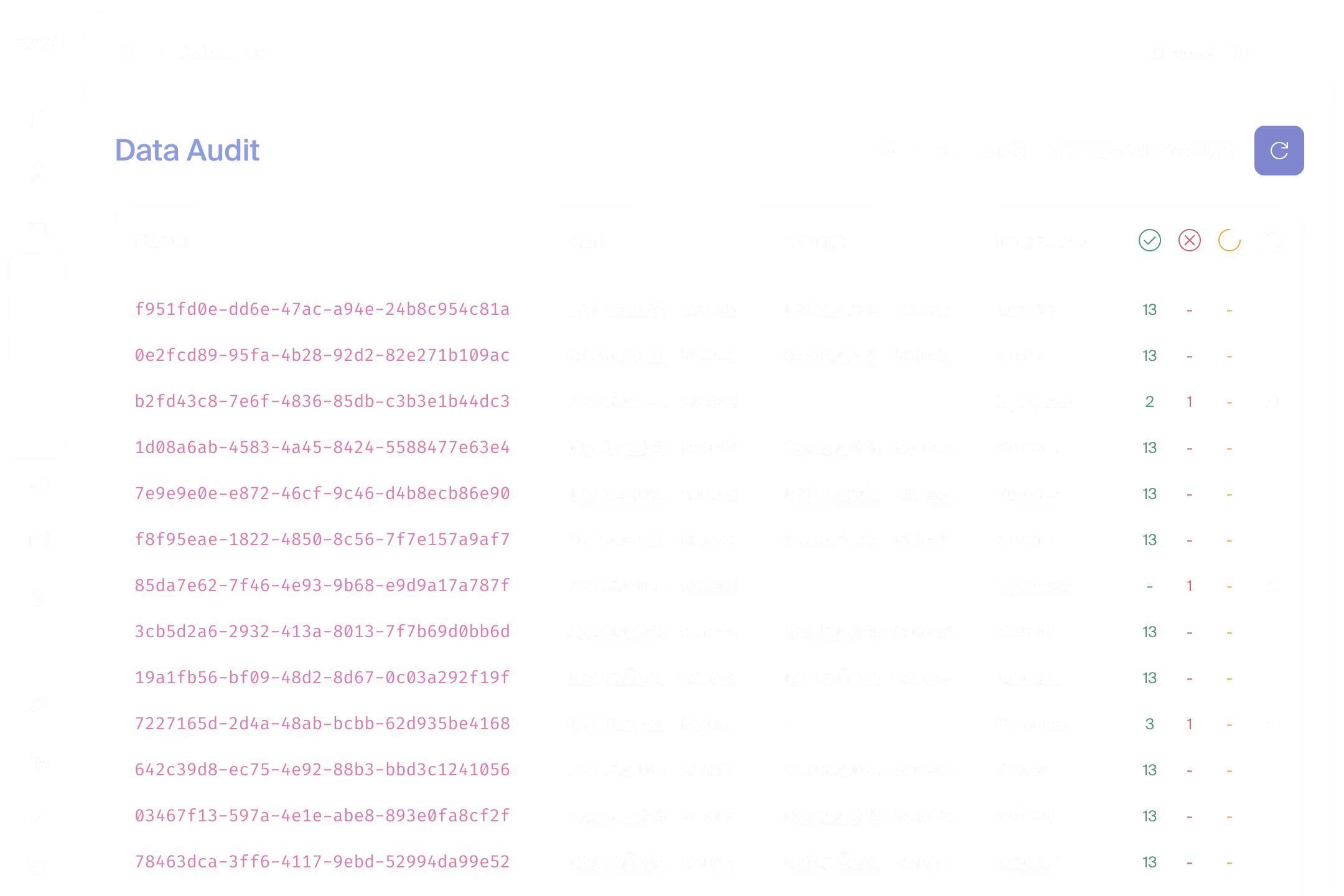
Audit and retention requirements that demand full lineage across every data movement
Constant vendor and schema changes that break traditional ETL pipelines
Increasing pressure for real-time visibility across risk, fraud, liquidity, and settlement
Where EASL works within the financial ecosystem
Investment Funds
Research, trading, and risk teams can't afford stale or inconsistent data. EASL normalizes market-data feeds, alternative datasets, and internal records so your portfolio and risk models stay aligned even as vendors change formats or update APIs without warning.
Onboarding new vendor feeds without disrupting existing models and extracting deal data from third-party sourcing platforms while tracking changes over time
Maintaining consistent data definitions across research, risk, and portfolio, and valuation systems
Delivering a standardized source of truth for risk, reporting, NAV components, and audits

Banking and Credit Unions
Core upgrades and digital transformation can't wait, but shutting down operations isn't an option. EASL synchronizes data across ledgers, payment rails, and digital channels while maintaining an immutable audit trail.
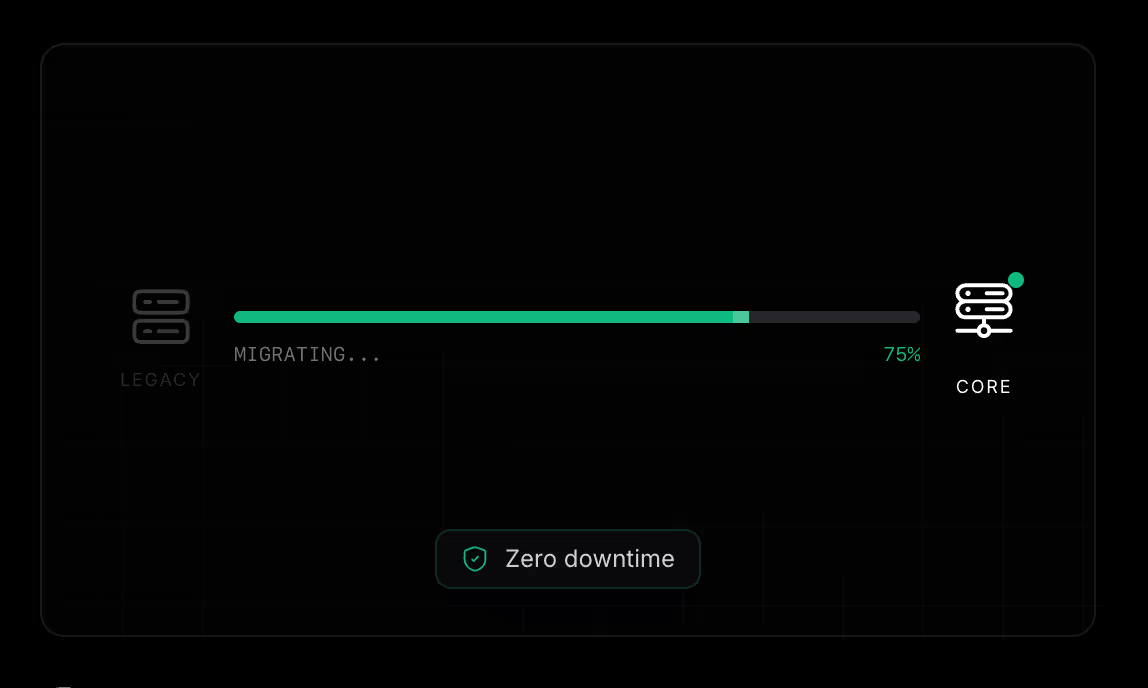
Core banking migrations and system consolidations that can’t risk downtime
Unifying data across banking, financial, and HR systems during consolidation
Enterprise reconciliation across ACH, cards, wires, RTP, FedNow, and treasury operations
AML, KYC, CECL, loan-origination, and fraud analytics requiring clean, current data at scale
Payments and Marketplaces
Fast-moving ecosystems of gateways, partners, and merchants require precision. EASL processes high-frequency transactions, reconciles multi-provider data, and ensures every event lands where it belongs, accurately and securely.
Integrating data from multiple payment service providers without losing transaction details
Automating exception handling and replay with full audit records
Maintaining merchant and settlement reporting as products and partners evolve
How EASL modernizes financial data movement
EASL brings a DataDevOps approach that replaces this cycle with a system built to adjust in real time. Your data moves through a controlled, transparent environment that keeps legacy and modern systems in sync without constant rework.
Adaptive pipelines
Pipelines that adjust automatically when sources, schemas, or definitions change
Validation in motion
With automated error detection and resolution, cutting reconciliation time from days to minutes
Side-by-side operation
Operation across new and legacy cores, ledgers, and payment systems to support conversions, consolidations, and M&A
Complete lineage and auditability
For confident regulatory and internal reporting
Deployment flexibility
Built on Kubernetes for scalable, portable, behind-firewall or cloud use
Security and compliance
Full encryption, SOC 2 Type II controls, and a complete, queryable data history
Modernizing two legacy systems in 40 days
Delivered on an accelerated timeline
A regional bank ran new and old cores in parallel, validating data in transit and cutting months of work down to weeks.
Eliminated rework and technical debt
Schema changes, mismatched definitions, and outdated logic were absorbed by adaptive pipelines, not rebuilt by hand.
Preserved full audit traceability
Every transformation and record movement was logged, supporting regulatory, risk, and internal oversight throughout the transition.
Financial Services Data Movement FAQs
How does EASL address financial institutions’ critical data needs and deliver better outcomes?
EASL provides an adaptive data-movement platform that connects legacy and modern systems, validates and transforms data in transit, and maintains complete lineage for audit and compliance. It solves for critical needs like reliable access, consistent validation, secure transformation, and audit-ready data delivery—reducing operational pain and accelerating success across financial workflows.
Is EASL compliant with financial-industry security standards?
Yes. The platform is built with end-to-end encryption, including SHA256 with rotating keys, SOC 2 Type II certification, and support for behind-firewall or hybrid deployment models that meet strict data-governance policies. EASL also supports secure containerized deployment for consistent, scalable environments.
How does EASL reduce reconciliation and reporting delays?
EASL performs validation as data moves, catching and correcting errors before they reach downstream systems. That shortens close cycles and ensures accurate, auditable reports for finance and compliance teams.
Can EASL integrate with our existing ETL and data-warehouse tools?
Absolutely. EASL runs alongside your current infrastructure, fetching from any source and publishing to any destination. It eliminates manual hand-offs and reduces or even removes the need for traditional ETL and iPaaS maintenance cycles.
What types of financial data can EASL handle?
EASL can handle everything from transactional and customer data to market, risk, and regulatory datasets. The platform’s schema-flexible architecture handles structured, semi-structured, or unstructured data at scale, ensuring continuity as systems and formats evolve.
Can EASL support regulatory reporting requirements?
Yes. EASL maintains full lineage, traceability, and immutable audit records that support compliance across reporting frameworks, including internal audit, regulatory examinations, and model-risk oversight.
Still got questions? Contact us.
Every financial organization’s data landscape is different. Tell us what yours looks like.
We're data geeks who love to chat with anyone who appreciates clean infrastructure and issue-free data streams.